

A new white paper comparing FOAMGLAS® cellular glass insulation to cold-service aerogel blanket insulation reports that FOAMGLAS® cellular glass insulation is quicker and less expensive to install, saving approximately 65 percent in total materials and labor costs.* Titled “FOAMGLAS® Cellular Glass Insulation Vs Cold-Service Aerogel Blanket Insulation in Cryogenic Applications,” the paper considers multiple factors that contribute to the longstanding performance and economics of insulating systems used in cryogenic applications. These factors include initial and long-term thermal conductivity, permeability, fire performance and cost of installation. Following are highlights of key findings shared in the white paper:
Declarations of aerogel thermal conductivity have shifted: Performance claims for aerogels have changed over the years. A review of product literature published in 20121 and 20242 revealed that the thermal conductivity of Cryogel® Z blanket, an example of cold-service aerogel blanket insulation, increased at every temperature reported. Considering water vapor sorption, Cryogel® Z blanket literature published in 2024 increased about five times compared to 20121,2. In contrast, thermal performance data reported on product data sheets for FOAMGLAS® insulation remained constant for those same analyzed characteristics during that period. These findings illustrate the importance of making specifications based on the most recent data.
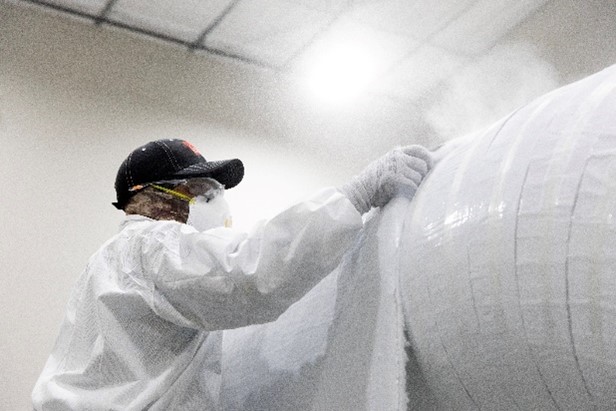
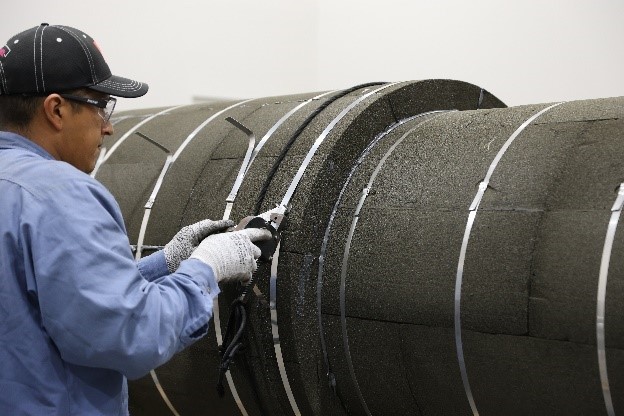
Above: The study compared installation time as well as the material and labor costs of insulating cryogenic process equipment with a cold-service aerogel blanket insulation (left) and FOAMGLAS® cellular glass insulation (right).
Pre-installation factors can reduce the performance of aerogels: Several factors can reduce the thermal conductivity performance of aerogel blankets. Shipping, handling and installation can lead to a loss of particles, increasing thermal conductivity and creating dust that requires additional PPE. Additionally, normal environmental conditions can further degrade aerogel blankets. Test results using ASTM C518 (Standard Test Method for Steady-State Thermal Transmission Properties by means of the Heat Flow Meter Apparatus).revealed that the thermal conductivity of cold-service aerogel blankets increased between 7-8 percent as a result of handling 3. Moisture absorption is another concern. Aerogel blankets can be affected by rain and humidity on the jobsite. In some cases, aerogel blankets’ thermal conductivity doubles when exposed to high humidity environments before testing, as measured by ASTM C518.
In comparison, FOAMGLAS® insulation does not exhibit degradation of thermal properties due to handling. The 100 percent closed-cell glass composition of FOAMGLAS® insulation makes it impermeable to water and water vapor, meaning it does not experience the same degradation observed with cold-service aerogel blankets.
Non-absorbent insulation provides optimal protection against liquid and vapor moisture: While aerogel blanket insulation is hydrophobic, this property plays no role in preventing the ingress of water in vapor form. Aerogel blanket insulations must rely on an external vapor retarder to resist water vapor intrusion and subsequent condensation. To offset the risk of vapor infiltrating the insulating system, an increased thickness of insulating material may be required, potentially increasing material costs. Additionally, when the system is in service at cryogenic temperatures, any water infiltrating the insulating system can become ice, further degrading thermal conductivity. Conversely, FOAMGLAS® cellular glass insulation is impermeable to liquid and vapor moisture, and individual sections of this insulation will not absorb moisture in either form.
Hydrocarbon absorption by aerogel blanket insulations poses fire safety concerns: Although aerogel blanket insulation is hydrophobic, this property in an insulating material is not an applicable countermeasure to exposure to liquid hydrocarbons. As permeable materials, aerogel blankets may absorb hydrocarbons, presenting a risk to fire safety if saturation occurs and liquid hydrocarbons inadvertently ignite.
FOAMGLAS® cellular glass insulation is a 100 percent closed-cell insulation that will not absorb hydrocarbons in liquid or gaseous forms.
Study finds cellular glass insulation can save on labor, material and overall project costs: In August 2024, Owens Corning Insulating Systems, LLC, commissioned an independent, third-party insulation contractor to conduct a study comparing the install time, material and overall project costs of insulating an assembly with FOAMGLAS® cellular glass insulation and a cold-service aerogel blanket insulation.1 The study found that, FOAMGLAS® insulation can save approximately 70 percent in material costs and 25% in labor costs compared to cold-service aerogel blankets.*
Remarking on the study results, Collin Smith, product manager technical insulation, stated, “Findings from this study conducted by an independent contractor show that selecting FOAMGLAS® cellular glass insulation, an impermeable, closed-cell insulating material, can help specifiers design long-lasting, cost-effective insulation systems that deliver thermal performance while minimizing dust, mitigating moisture ingress, and supporting fire safety.”
The paper, “FOAMGLAS® Cellular Glass Insulation Vs Cold-Service Aerogel Blanket Insulation for Cryogenic Applications,” is available here.
For more information visit www.owenscorning.com