


OPW Retail Fueling has announced that its new 71SO Segmented Overfill Prevention Valve has received certification from the California Air Resources Board under its Enhanced Vapor Recovery (EVR) program. The certification confirms that the valve meets stringent safety, containment, and emissions standards while also helping reduce complexities associated with storage, shipping, installation, and testing.
CARB certification is widely recognized as one of the most rigorous regulatory benchmarks for fueling equipment. Products that achieve this designation are considered compliant with demanding environmental and operational requirements, giving regulators, fuel marketers, and installers confidence in their performance within modern fueling infrastructure.
According to Ed Kammerer, vice president of Global Product Marketing at OPW Retail Fueling, achieving CARB EVR certification represents a significant milestone and reflects the company’s ongoing commitment to product innovation and performance. He noted that the certified 71SO valve enables fuel retailers operating in regions with strict vapor-tightness and equipment standards to benefit from its segmented design and logistical advantages.
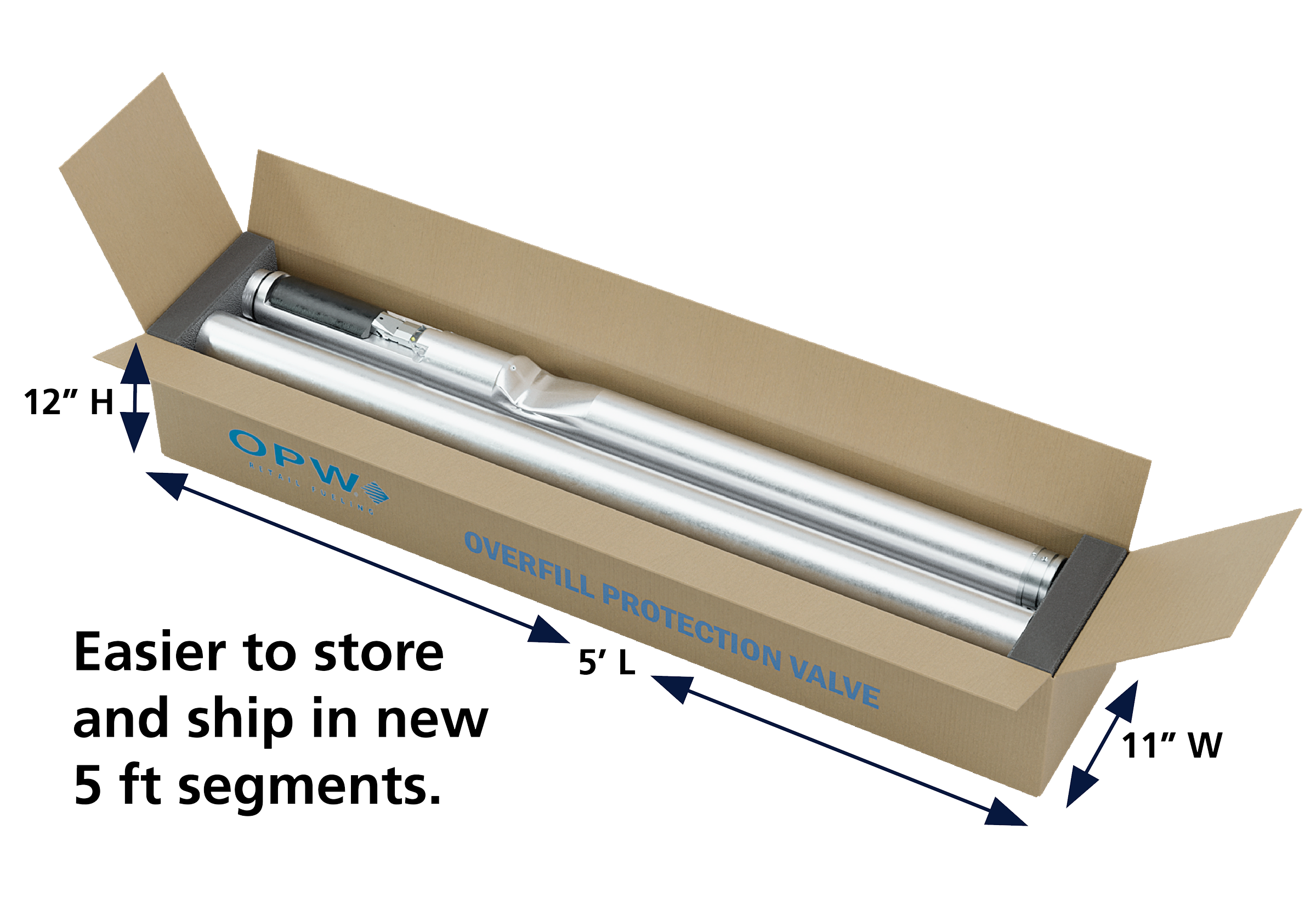
The 71SO Segmented Overfill Prevention Valve is designed to ship in four 5-foot interlocking segments, offering several operational benefits. Its modular construction supports more compact storage and simplified transportation, while also reducing freight costs by eliminating overlength shipping fees and minimizing the risk of damage during transit. Despite its segmented design, the valve maintains the same two-stage positive shut-off mechanism found in the original 71SO valve used by fuel retailers globally.
Compatible with 4-inch fill risers, the valve can be used in both new installations and retrofit applications. The segmented components can be configured for tank diameters ranging from 8 to 12 feet, with an overall length exceeding 223 inches. Installation does not require excavation or specialized manholes, and the valve can be assembled on-site without adhesives, allowing for immediate deployment without curing delays.
Testable versions of the valve provide additional long-term value by enabling operators to verify performance directly from the surface without removing the unit from the tank. This process can be completed in approximately 60 seconds, significantly reducing maintenance time compared to traditional methods.
In operation, the valve automatically shuts off when tank capacity reaches 95 percent, helping to prevent overfills and spills. A bypass feature allows for controlled topping off at a reduced flow rate until the tank reaches 98 percent capacity, at which point the valve fully closes to stop fuel delivery. The system operates independently of internal tank pressure, contributing to safer and more efficient fueling operations.
For more information visit www.opwglobal.com