

JERA Co., Inc., Japan’s largest power producer, has announced the signing of a Strategic Partnering Agreement with the Office of the Governor of the State of Hawai’i to support Hawai’i’s decarbonization goals and energy transition.
Agreement Structure and Objectives
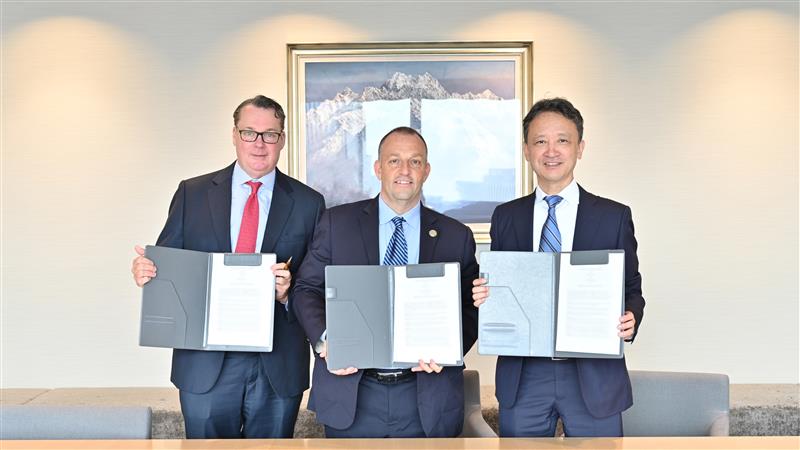
The Strategic Partnering Agreement was signed on 6 October 2025 at JERA’s Tokyo headquarters by Governor Josh Green and JERA Global CEO Yukio Kani, marking a new phase in Hawai’i-Japan collaboration on energy partnership and future-orientated development. The agreement establishes a framework for long-term collaboration amongst JERA Co., Inc., its US subsidiary JERA Americas Inc., and the State of Hawai’i, focusing on fuel diversity and developing pathways towards decarbonization.
Policy Context and Study Implementation
The partnership is designed to help realize the Hawai’i State Energy Office’s Alternative Fuels, Repowering and Energy Transition Study, published in January 2025. The study concluded that in the short term, the state should accelerate its shift away from oil by utilizing affordable and reliable alternative fuels, including natural gas.
Leadership Perspectives
Governor Josh Green stated that the State of Hawai’i is committed to achieving a cleaner, more sustainable energy future for residents. He characterized collaboration with JERA—Japan’s largest power producer and recognized global leader in energy transition—as providing access to valuable expertise and experience that will help accelerate the state’s decarbonization journey whilst improving reliability and affordability for residents.
Yukio Kani, Global CEO of JERA Co., Inc., expressed honor at partnering with the State of Hawai’i in advancing energy transition goals. He noted that as island communities, Japan and Hawai’i share similar challenges and opportunities in pursuing affordability, stability, and sustainability. Kani stated that through collaboration, the parties aim to develop practical, innovative solutions strengthening energy resilience and reducing costs for the people of Hawai’i.
JERA Capabilities and Commitments
JERA brings extensive experience in the development and operation of large-scale, reliable energy infrastructure worldwide, with a growing focus on low-carbon fuels, hydrogen, ammonia, and renewable energy integration. The company has committed to achieving net-zero CO₂ emissions from its domestic and international operations by 2050, as part of its mission to provide cutting-edge solutions to global energy challenges and ensure a sustainable and stable global energy supply.
Company Background
JERA is a global energy leader and Japan’s largest power generation company, focused on providing cutting-edge solutions to global energy issues. Established in 2015, the company produces one-third of Japan’s electricity and ranks as one of the world’s largest LNG buyers. JERA maintains global reach and strength throughout the energy supply chain, from participation in LNG upstream projects and fuel procurement through fuel transportation to power generation.
Strategic Alignment and Island Context
The partnership reflects shared challenges faced by island energy systems, including limited indigenous energy resources, dependence on imported fuels, geographic isolation from continental energy infrastructure, and vulnerability to supply disruptions. Both Hawai’i and Japan pursue energy security objectives whilst addressing decarbonization commitments and maintaining affordability for consumers and businesses.
Hawai’i’s current heavy reliance on petroleum products for power generation creates cost pressures and carbon intensity challenges. Diversification to natural gas and other alternative fuels provides a transitional pathway reducing emissions and potentially lowering costs compared to petroleum whilst enabling integration of increasing renewable energy capacity.
Energy Transition Pathways
The Strategic Partnering Agreement framework enables exploration of multiple decarbonization pathways appropriate to Hawai’i’s circumstances. JERA’s expertise in LNG infrastructure development, ammonia and hydrogen as potential future fuels, and integration of renewable energy with thermal generation addresses technical challenges in transitioning island power systems.
Natural gas infrastructure development in Hawai’i would require solutions for LNG import, storage, and distribution suited to island scale and geography. JERA’s experience with LNG projects globally, including smaller-scale infrastructure serving island and remote markets, provides relevant capabilities for Hawai’i’s requirements.
For more information visit www.jera.co.jp